What causes street lights to flicker or fail in China? The answer is rarely limited to one defective bulb. On a busy road in Guangzhou, an LED lamp may pulse when its driver overheats, while a coastal fixture in Qingdao can suffer from salt corrosion. In northern cities, winter temperature changes may weaken seals, cables, or control components. Dust, rainwater, loose connections, and unstable voltage can also turn a small fault into a dark section of roadway.
Local maintenance teams usually inspect the lamp, driver, fuse, photocell, wiring, and distribution cabinet. They may also review maintenance logs and measure voltage with certified equipment. This practical process matters because a light that flickers at midnight may look normal during a daytime inspection. Smart lighting systems add another layer. A communication fault or incorrect timer setting can imitate an electrical failure. Quick assumptions often mislead.
The quality of installation and maintenance is equally important. Poor heat dissipation can shorten LED service life, even when the product appears new. Road construction may disturb buried cables, but the visible symptom can appear far away. Weather records, traffic conditions, and repeated fault locations provide useful evidence. Still, not every failure has a clear cause immediately. A careful diagnosis should separate confirmed findings from reasonable possibilities. This article examines the most common technical, environmental, and operational reasons behind flickering or failed street lights across China, while recognizing that local designs and maintenance standards can differ.
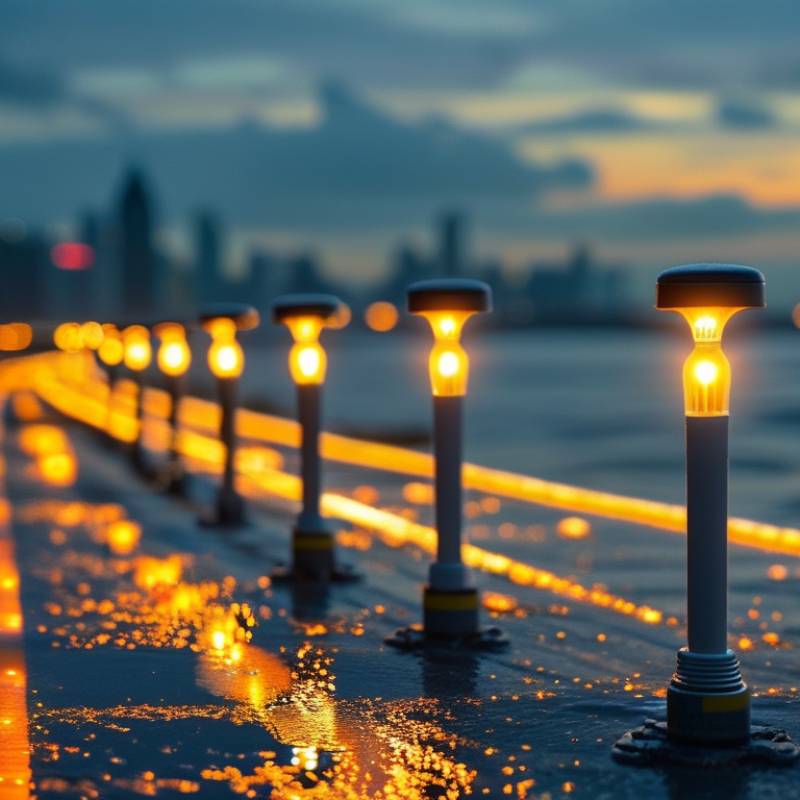
Street lights in China usually flicker because of electrical, environmental, or control-system problems. Loose terminals, unstable voltage, and aging cables can interrupt current for milliseconds. The lamp then flashes, restarts, or remains dark. LED drivers are another frequent weak point. Heat, moisture, and repeated voltage changes can damage their capacitors and protective circuits. Coastal cities add salt air, while northern areas bring freezing temperatures and thermal stress.
Water entering a poorly sealed housing can corrode contacts and create intermittent faults. Dust can also block heat release, raising the driver’s operating temperature. Photocells, timers, and smart-control nodes may send incorrect switching signals. Construction near roads sometimes disturbs underground cables. The International Energy Agency estimates that lighting uses about 15% of global electricity, so small reliability losses deserve serious attention. Chinese maintenance teams should also check requirements under road-lighting standards such as CJJ 45 and GB 50034. Standards help, but they do not replace careful site inspection.
Tips: Record the exact time, weather, voltage, and fault pattern. A lamp flickering only during rain suggests sealing or insulation trouble. A whole row failing together points more strongly to a feeder, cabinet, or control fault. Inspect terminals for heat marks and corrosion, then test driver output under load. Do not replace every lamp immediately; that can hide a wiring problem. Maintenance records are useful, though they are often incomplete and sometimes reveal our assumptions were wrong.
Loose or corroded connections, LED driver faults, moisture ingress, and surge damage are major engineering causes of street-light flickering or failure. The chart uses a transparent 1–5 engineering relevance score rather than claiming a nationwide incident percentage, because China does not publish one standardized national breakdown of street-light failures by cause.
What Causes Street Lights to Flicker or Fail in China?
China’s street lighting usually draws power from municipal low-voltage distribution networks. Many roads use 220-volt single-phase circuits, while larger corridors may use three-phase supplies. A feeder cabinet sends electricity through underground cables, junction boxes, and pole-mounted equipment. Photocells or astronomical clocks switch lamps at dusk and dawn. Newer systems may add wireless controllers, motion sensors, and remote monitoring.
Control quality often determines reliability. A loose terminal can create visible flicker. Water inside a cable joint can trip protection equipment after heavy rain. Voltage drops may appear when long roads share one feeder. The International Energy Agency reports that lighting represents roughly 15% of global electricity use, while efficient LEDs can greatly reduce demand. Yet efficient hardware still needs stable power and correct programming. A 2023 lighting industry report from China also identifies intelligent controls as a major direction for municipal upgrades. Remote control sounds simple. Field conditions are not.
Tips: Check the feeder cabinet before replacing lamps. Record the flicker time, weather, and affected pole numbers. Compare voltage at the cabinet and the lamp. Inspect grounding, surge protection, cable insulation, and controller schedules. Maintenance teams should also review outage logs against the national standard GB/T 2887 and local road-lighting requirements. Data helps, but one assumption can mislead. A failing lamp may actually expose a deeper wiring problem.
| System Area | Typical Technical Data | Common Symptom | Likely Cause of Flicker or Failure | Practical Inspection or Control |
|---|---|---|---|---|
| Public Power Supply | Low-voltage distribution commonly uses 220 V single-phase circuits or 380/220 V three-phase systems at 50 Hz. | Several lights on the same circuit dim, blink, or switch off together. | Voltage fluctuation, phase imbalance, overloaded feeders, or an upstream supply interruption. | Measure voltage and frequency at the distribution cabinet and at the furthest luminaire under load. |
| Distribution Cabinet | Usually contains circuit breakers, contactors, terminals, surge protection, and control equipment. | An entire road section remains dark or repeatedly restarts. | Tripped breaker, worn contactor, loose terminal, overheating, or water ingress. | Check breaker status, terminal tightness, cabinet temperature, moisture marks, and contactor operation. |
| Underground Cable Network | Outdoor feeder cables are routed through ducts, conduits, handholes, or buried cable corridors. | Intermittent operation, partial outages, or lights that fail after rain. | Insulation deterioration, cable-joint faults, damaged conductors, or water entering handholes. | Perform insulation-resistance and continuity tests, and inspect cable joints and drainage conditions. |
| LED Luminaire | Modern installations commonly use LED modules with an electronic driver; rated service life is often specified by an L70 value of approximately 50,000–100,000 hours, depending on design and operating conditions. | A single fixture flickers, becomes noticeably dimmer, or goes completely dark. | Driver degradation, LED module failure, thermal stress, or poor electrical connections inside the fixture. | Compare input voltage and current with a functioning fixture and inspect the driver, seals, connectors, and heat dissipation. |
| Photocell or Time Control | Lights may be controlled by photocells, astronomical time switches, programmable controllers, or combinations of these devices. | Lights switch on during daylight, switch off too early, or cycle near dusk and dawn. | Dirty or misaligned photocell, incorrect time settings, sensor shading, or unstable control power. | Check the programmed schedule, sensor orientation, sensor cleanliness, and manual override status. |
| Remote Monitoring and Control | Larger urban systems may use centralized or wireless monitoring for switching, fault reporting, energy measurement, and dimming. | A group of lights follows an incorrect schedule or stops responding to commands. | Communication loss, controller software error, incorrect configuration, or failure of a remote control unit. | Review event logs, controller status, communication signal, clock synchronization, and local override settings. |
| Surge and Lightning Protection | Protection devices are commonly installed at cabinets and may also be installed inside outdoor luminaires. | Multiple drivers fail after thunderstorms or switching events. | Transient overvoltage, lightning-induced surges, inadequate grounding, or a spent surge-protection device. | Inspect surge-protection indicators, grounding conductors, bonding points, and post-storm fault records. |
| Weatherproof Enclosure | Outdoor equipment is normally selected with an ingress-protection rating appropriate for dust and water exposure; IP65 and IP66 are common design levels for many outdoor enclosures. | Flicker or failure appears during rain, fog, flooding, or large temperature changes. | Cracked seals, blocked drainage, condensation, corrosion, or incorrectly closed covers. | Inspect gaskets, cable glands, drain paths, corrosion, condensation, and enclosure closure. |
| Neutral and Earthing Conductors | Correct neutral continuity and protective earthing are essential for stable operation and electrical safety. | Unstable brightness, nuisance breaker trips, electric-shock risk, or unexplained equipment damage. | Loose or broken neutral, high-resistance connections, poor bonding, or damaged protective conductors. | Test continuity, connection resistance, protective-conductor integrity, and earth-system condition by qualified personnel. |
| Scheduled Dimming | Dimming can be programmed by time, traffic conditions, or a central control platform to reduce energy use during low-demand periods. | Lights appear intentionally dimmed or change brightness at specific times. | A valid dimming schedule may be mistaken for a fault; incompatible control signals can also cause visible instability. | Compare observed behavior with the approved schedule and verify compatibility between controller and LED driver. |
| Maintenance and Aging | Failure rates generally increase as drivers, capacitors, seals, connectors, cables, and control components age. | Repeated failures occur at the same location or across equipment installed during the same period. | End-of-life components, deferred cleaning, vibration, corrosion, thermal cycling, or inadequate spare-parts management. | Maintain asset records, inspect periodically, clean optical and electrical compartments, and replace defective components promptly. |
Note: Technical values and equipment arrangements vary by city, project age, road classification, climate, and local electrical design. Electrical testing should be performed by qualified personnel.
What Causes Street Lights to Flicker or Fail in China?
Weather is a frequent cause of street-light failure across China. The China Meteorological Administration reported that 2023 had the country’s highest average temperature since complete records began in 1961. Repeated heat and cooling cycles expand metal joints and weaken cable seals. Heavy rain can enter poorly protected drivers, junction boxes, and underground conduits. Salt mist creates faster corrosion in coastal cities. Lightning adds another risk. CIE 115:2010 recommends careful protection and maintenance for outdoor lighting systems, yet field conditions are rarely perfect. A dry-night test can mislead.
Traffic creates mechanical stress that technicians may overlook. China’s Ministry of Public Security recorded 435 million motor vehicles at the end of 2023. More vehicles mean greater vibration, roadside impact risk, and pressure on already crowded corridors. Large trucks can loosen pole foundations or damage inspection covers. Minor collisions may bend a pole without immediately interrupting power. Flickering often appears later, after water reaches a strained cable.
Construction causes a different pattern of damage. Excavators can cut buried cables, while road widening may leave poles unstable or poorly aligned. Dust enters open fixtures during concrete work, and temporary connections sometimes remain after crews leave. The China Urban Construction Statistical Yearbook shows the continuing expansion of urban road infrastructure, increasing the number of assets requiring coordination. It is tempting to blame the lamp first. Better inspections check foundations, grounding, cable insulation, drainage, and recent construction records before replacing components. Some diagnoses remain uncertain, especially when faults occur only during rain.
Street lights in China rarely fail for one simple reason.
Crews often find loose terminals, aging drivers, water inside housings, or damaged underground cables. Flickering can also begin with unstable voltage or a failing photocell. Technicians first inspect the lamp, pole, cabinet, and nearby connections. They record the fault time and weather conditions.
Then they measure voltage, current, insulation resistance, and earth continuity. A thermal camera can reveal hot terminals before they burn.
Repair decisions should follow evidence, not guesswork.
Teams usually isolate the circuit, tighten or replace damaged connections, seal water entry, and test the control system. They may replace a driver instead of the whole luminaire.
The International Energy Agency’s Energy Efficiency 2024 report says lighting uses about 15% of global electricity. The U.S. Department of Energy reports that many LED street-light products are rated for 50,000 hours or more.
Longer life still depends on heat control and clean electrical contacts. A tidy checklist can miss an intermittent fault. That is where field judgment matters.
Tips:
Photograph the fault before opening the housing. Compare readings with the original commissioning record. Check the neutral conductor, surge protection, and cabinet timer.
After repair, observe the light through one full night. A replaced lamp may hide a cable problem.
Maintenance teams should review that possibility, even when the street looks normal.
In China, flickering street lights often expose loose connections, aging drivers, water ingress, or unstable feeder voltage. A failed lamp is not always a lamp problem. During field inspections, technicians should check terminal boxes, grounding, cable joints, and cabinet logs before replacing LEDs. The International Energy Agency’s Energy Efficiency 2023 report states that lighting consumes about 15% of global electricity. Reliability and efficiency should therefore be planned together.
Smart controls can improve reliability through scheduled dimming, voltage monitoring, fault alarms, and remote resets. A connected cabinet may identify a dark fitting within minutes, rather than waiting for a public complaint. The U.S. Department of Energy has documented energy savings above 50% in some networked street-lighting projects.
China’s grid upgrades add value through stronger transformers, surge protection, insulated connections, and sectionalized feeders. However, sensors can misread outages, and communication networks may fail during storms. A modern controller is not a cure-all.
Tips: Match lighting schedules with real pedestrian activity. Inspect cabinets after heavy rain. Keep a manual override. Use power-quality meters, not eyesight alone. Record failure rates before and after upgrades. CIE outdoor-lighting guidance supports measured electrical and photometric verification. In practice, maintenance teams sometimes trust dashboards too quickly. That is a useful warning. Reliability still depends on clean terminals, dry enclosures, and technicians who investigate the physical fault. (Sources: IEA, Energy Efficiency 2023; U.S. DOE, Solid-State Lighting reports; CIE technical guidance.)
: Repeated heating and cooling can expand metal joints. Cable seals may weaken over time. The fault may appear only at night.
Water may enter drivers, junction boxes, or underground conduits. Salt mist worsens corrosion near coastal roads. A dry-night inspection can miss the problem.
Yes. Lightning can stress lamps, controllers, cables, and electrical cabinets. Surge protection reduces risk, but it cannot prevent every failure.
Heavy trucks can loosen pole foundations and damage inspection covers. Small impacts may bend poles without cutting power immediately. Flickering can appear later.
Excavators may cut buried cables. Road widening can leave poles unstable or misaligned. Concrete dust may enter open fixtures.
Not always. They should inspect grounding, cable joints, insulation, drainage, and cabinet records. The lamp may only be showing the symptom.
Remote systems can monitor voltage, schedule dimming, send fault alarms, and reset some equipment. A connected cabinet may identify a dark fitting quickly. Communication can still fail during storms.
Teams should inspect cabinets after heavy rain and test power quality. They should compare failure rates before and after the upgrade. Dashboards can mislead.
Keep enclosures dry and terminals clean. Match lighting schedules with real pedestrian activity. Maintain a manual override. Some diagnoses remain uncertain. That deserves review.
What causes street lights to flicker or fail in China? Common reasons include aging lamps, loose wiring, overloaded circuits, damaged controllers, poor connections, and unstable power supply. Street lighting systems are typically connected to local electrical grids and managed through timers, control cabinets, sensors, or centralized smart-control platforms. When components wear out or settings become inaccurate, lights may flicker, switch on at the wrong time, or stop working completely.
Weather, heavy traffic, road construction, flooding, dust, and accidental impacts can also damage poles, cables, and underground equipment. Maintenance teams usually inspect the power supply, control units, wiring, and lamps step by step to identify the fault before replacing or repairing the affected parts. Regular inspections, better weather protection, upgraded grid infrastructure, energy-efficient equipment, and smart monitoring can help detect problems earlier and improve reliability. Together, these measures support safer roads, lower maintenance costs, and more consistent street lighting in both urban and rural areas.

Star Lighting