In recent years, smart city technology has transformed urban infrastructure. One prominent innovation is the use of motion sensors in street lighting. But how do motion sensors work in street lighting? They activate lights based on pedestrian or vehicle movement. This technology saves energy and reduces costs, creating efficient public spaces.
Motion sensors enable lights to dim or turn off when no activity is detected. This feature not only conserves energy but also prolongs the lifespan of the lighting systems. Imagine a street that brightens only when someone approaches. Such dynamic lighting can enhance safety and visibility during nighttime.
However, the reliance on motion sensors is not without issues. Sensitivity levels must be carefully calibrated. If set too low, lights may miss movements, leading to dark areas. On the other hand, overly sensitive sensors can cause lights to flicker unnecessarily, creating annoyance for residents. Striking the right balance is essential for maximizing the benefits of this innovative technology.
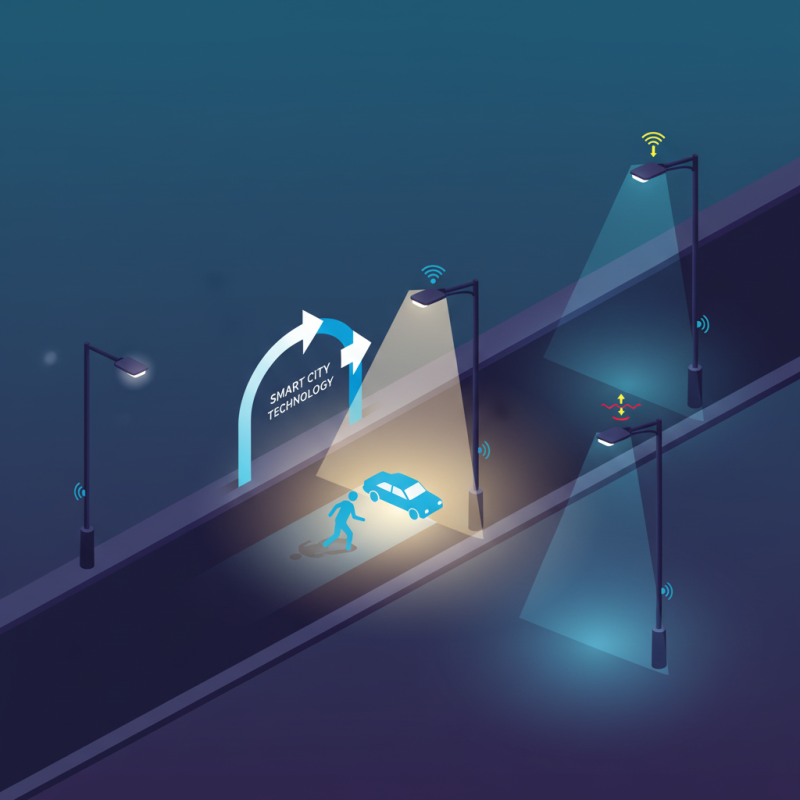
Motion sensors have become a pivotal component in modern street lighting systems. Their ability to detect movement allows street lights to illuminate only when needed. This innovation significantly reduces energy consumption. In more populated areas, lights may remain on longer, while in quieter zones, they dim or turn off when no activity is detected.
Integrating motion sensors into street lighting relies on careful installation and calibration. Inconsistent settings may lead to discomfort for pedestrians or unexpected dark spots. Street lighting should provide safety without wasting energy. Local authorities must weigh these factors when designing urban spaces. The technology can also encounter challenges in various weather conditions, impacting performance.
Maintenance and upgrades are vital to enhance reliability. Regular assessments ensure sensors function correctly and adjustments are made promptly. Effective use of motion sensors not only promotes energy efficiency but also supports sustainable urban development. As cities grow, revisiting these systems becomes essential for improving public safety and minimizing environmental impact.
This chart illustrates the impact of motion sensors on the energy consumption of street lighting systems. The data represents the percentage reduction in energy usage when motion sensors are implemented in various urban settings.
Motion detection technology plays a crucial role in enhancing street lighting efficiency. These systems rely on various sensors, such as passive infrared and microwave sensors, to detect movement in their vicinity. When a pedestrian or vehicle approaches, the sensors activate the lights, illuminating the area only when necessary. This targeted lighting conserves energy and reduces light pollution, creating a more sustainable urban environment.
The effectiveness of motion sensors is not without challenges. Environmental factors can interfere with detection. For example, heavy rainfall or foliage may obstruct sensor signals. Additionally, false activations could occur due to wildlife or passing vehicles. Addressing these issues is vital for optimizing system performance.
Despite these obstacles, the benefits of integrating motion sensors with street lighting are significant. Cities can reduce energy costs while improving safety for pedestrians and cyclists. By implementing adaptive lighting systems, urban planners can create smarter, more responsive environments. As technology evolves, further refinements will enhance the reliability of motion detection in street lighting.
Motion sensors play a crucial role in maximizing street lighting efficiency. By automatically adjusting light levels based on pedestrian or vehicular presence, these sensors reduce energy consumption significantly. A study reported that utilizing motion sensors could lead to energy savings of up to 75% in municipal street lighting. This reduction not only lowers operational costs but also lessens the environmental impact of urban lighting systems.
Furthermore, the enhanced efficiency supports improved safety. Well-lit streets can deter crime and reduce accidents. Research has shown that optimized lighting, especially in areas with motion sensors, results in a 20% decrease in nighttime accidents. When lights dim in low-traffic periods, they still provide enough illumination without waste. Yet, the implementation is not without challenges. Some areas report sensor malfunctions or false activations, leading to inconsistencies. Addressing these issues is crucial for effective systems.
Additionally, while energy efficiency is vital, cities must consider the technology's life span and maintenance. Aging sensors can lead to gaps in lighting coverage. Investing in quality sensors is essential for durability and reliability. Cities must be diligent in monitoring their systems to ensure they are achieving the expected energy savings and safety benefits.
Integrating motion sensors into existing street lighting systems offers significant benefits but also poses various challenges. One of the primary issues is compatibility. Many older lighting systems cannot easily accommodate new technology. A report from the International Energy Agency notes that almost 75% of global street lighting is based on outdated technology. Upgrading these systems can require significant investment and technical expertise, which many municipalities may lack.
Another challenge lies in data management. Motion sensors generate vast amounts of data that require proper analysis for effective use. This presents difficulties in both storage and interpretation. According to a study published by the Urban Institute, cities implementing smart lighting solutions observed a 30% increase in data collection needs, straining existing infrastructure. This highlights the need for integrated platforms that can efficiently process sensor data.
Moreover, there are concerns about privacy and security. Community members may worry that motion sensors could be used for surveillance. Proper communication and transparency are vital to address these fears. Finding a way to balance safety and privacy will be crucial for the successful integration of motion sensors in street lighting. As this integration evolves, ongoing dialogue with stakeholders will be essential to navigate these complexities.
| Parameter | Description | Impact on Efficiency | Challenges | Potential Solutions |
|---|---|---|---|---|
| Energy Consumption | Reduction in energy use through adaptive lighting | Up to 30% savings | High initial installation costs | Government incentives and grants |
| Maintenance | Sensors require less frequent maintenance than traditional systems | Lower ongoing costs | Compatibility with legacy systems | Gradual upgrade strategies |
| Environmental Impact | Decreased light pollution through targeted illumination | Positive community feedback | Public resistance to change | Community engagement programs |
| User Experience | Enhanced safety through improved visibility in active areas | Increased pedestrian usage | Data privacy concerns | Transparent data policies |
Cities around the world are rethinking street lighting with motion sensor technology. This approach enhances both safety and energy efficiency. A report from the International Energy Agency notes that smart street lighting can reduce energy consumption by up to 70%. Many urban areas are seeing significant benefits from this technology.
In San Diego, for example, the city installed motion sensors in over 3,000 street lights. The sensors detect pedestrian movement and increase light intensity only when needed. As a result, the city reported a 50% reduction in energy costs. This initiative also improved safety, as brighter lights activate in busy areas, deterring crime. However, not all installations have succeeded. In some neighborhoods, sensor malfunctions led to lights flickering unpredictably, causing confusion.
London offers another example. The city implemented motion sensors in specific districts. Initial data showed a 30% energy savings. Yet, residents reported feeling uneasy during late hours when lights failed to activate promptly. This highlights the importance of a reliable system. Continuous monitoring and adjustment remain crucial for optimizing these smart lighting solutions.
: Motion sensors adjust light levels based on activity, reducing energy use by up to 75%.
Better-lit streets deter crime and reduce accidents. Studies show a 20% decrease in nighttime accidents.
Some sensors malfunction or activate incorrectly, causing inconsistent lighting. Addressing these issues is essential.
Cities need to regularly check sensors to ensure they provide expected energy savings and safety benefits.
Aging sensors may create gaps in lighting coverage, making reliability crucial for ongoing performance.
Reducing energy usage lowers operational costs significantly, allowing funds to be allocated elsewhere.
Some residents report unease when lights fail to activate promptly, indicating a need for reliable technology.
Cities like San Diego saw a 50% reduction in energy costs and improved safety with motion sensors.
While many cities report savings, results can vary; continuous monitoring is key for optimal outcomes.
Investing in durable sensors is essential; quality impacts longevity and overall system effectiveness.
Motion sensors play a pivotal role in modern street lighting systems by enhancing efficiency and safety. These sensors work by detecting movement within their range, allowing street lights to automatically adjust their brightness based on pedestrian or vehicular presence. This dynamic engagement not only conserves energy by reducing the illumination when the area is unoccupied but also improves visibility when activity is detected.
However, integrating motion sensors into existing street lighting systems presents certain challenges, such as compatibility and infrastructure considerations. Successful case studies in various cities demonstrate the effectiveness of this technology, showcasing how cities have overcome these obstacles to implement motion sensors successfully. In summary, understanding how do motion sensors work in street lighting can provide insights into optimizing energy use and enhancing urban safety.

Star Lighting