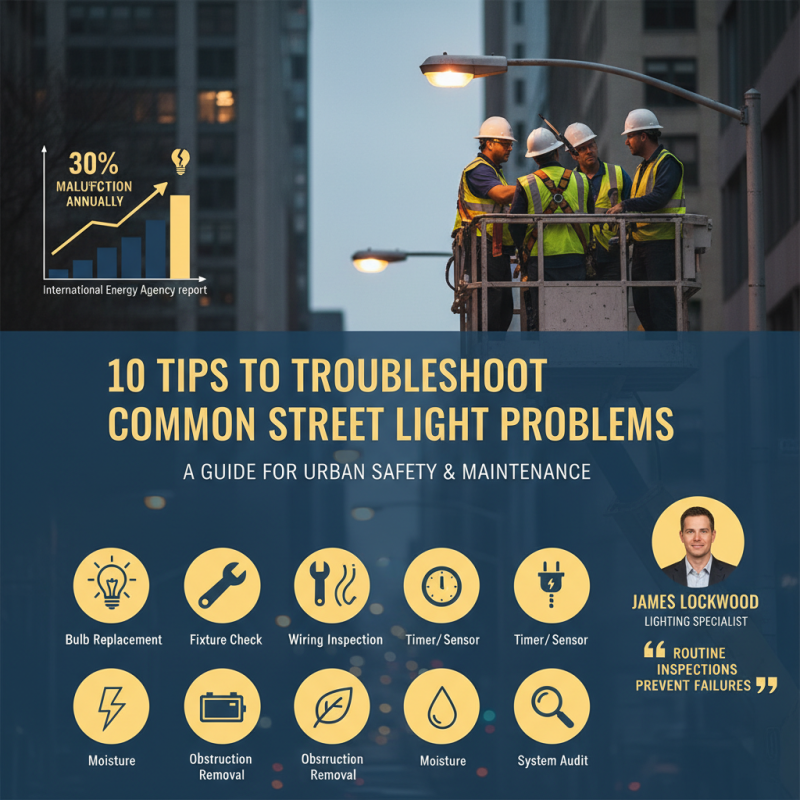
Street lights play a crucial role in urban safety and navigation. However, they often face various issues that can compromise their effectiveness. Understanding how to troubleshoot common street light problems is essential for municipalities and utility companies. According to a report by the International Energy Agency, nearly 30% of street lighting systems experience malfunctions annually, leading to increased accidents and reduced public safety.
Expert James Lockwood, a lighting specialist at Urban Light Solutions, emphasizes the importance of proactive maintenance, stating, “Routine inspections can prevent common street light failures before they occur.” Making repairs quickly not only enhances safety, but it also reduces long-term costs associated with lighting outages. The complexity of common problems, such as faulty bulbs or poor wiring, requires a systematic approach to identify and address the underlying issues.
In this guide, you'll find practical tips to effectively troubleshoot street light problems. From simple bulb replacements to wiring checks, each step is designed to empower local authorities and maintenance crews. Keeping our streets illuminated is not just a technical challenge; it’s a community safety imperative that reflects our commitment to public well-being.
Common Street Light Problems Overview
Street lights play a crucial role in urban safety and visibility. Common problems include faulty bulbs, broken fixtures, and malfunctioning timers. Identifying these issues early can prevent larger problems later. Regular inspections can save time and resources.
If you notice flickering lights, check the bulb connections. Sometimes, a loose wire can cause intermittent functionality. For light posts that are completely out, inspect the power supply. It could be a local outage or a tripped circuit. Understanding the electrical components is essential.
When dealing with physical damage, like broken glass or rusted poles, prioritize repairs immediately. These issues can pose safety risks. For persistent problems, try consulting with local authorities or specialists. Patience is key; troubleshooting can be a learning process.
Identifying Electrical Issues in Street Lights
Identifying electrical issues in street lights can often be challenging. However, understanding what to look for can make the process easier. Start by observing the light's performance. Is it flickering or completely out? These could be signs of electrical faults. Check for broken bulbs, as a simple replacement may solve the problem. Sometimes, shallow grounding can lead to inconsistent power delivery.
Another common issue is corroded connections. Inspect the wiring for signs of wear and tear. Corrosion can disrupt the electrical flow. Regular maintenance is crucial. Keep connections clean and securely fastened.
Pay attention to the control box. Faulty sensors can cause lights to malfunction. Replacing these components may restore proper function. Always ensure that power sources are stable. Voltage irregularities can affect street light performance. Simple voltage checks can avoid more significant problems later. Remember, taking small preventive measures can enhance system reliability.
Assessing Damage to Street Light Fixtures
Assessing damage to street light fixtures requires careful observation and analysis. Start by checking for cracked or broken glass. A damaged lens can lead to light leakage, reducing illumination on the street. According to a report by the Institute of Electrical and Electronics Engineers, even minor damages can result in a 20% loss of efficiency. Pay attention to rust or corrosion on metal parts. This can compromise structural integrity and lead to failure.
Electrical issues are common in street lights. Look for exposed wires or loose connections. A study from the National Electrical Manufacturers Association indicates that improper wiring is responsible for up to 30% of street light outages. Examine the pole for any signs of bending or weakness. A compromised pole can lead to fixtures falling, posing safety risks. Note that damage might not always be visible. Routine checks are essential to prevent larger issues.
Examining the light source itself is crucial. Is the bulb flickering? This could signify underlying electrical problems. Keep track of lighting performance patterns. An unexpected increase in outages might hint at an urgent need for repairs. Regular maintenance not only mitigates risks but also prolongs lifespan. A proactive approach can ensure street lighting remains effective and safe.
Troubleshooting Timer and Photocell Malfunctions
Street lights often rely on timers and photocells to function correctly. These components help automate lighting based on ambient light levels and predetermined schedules. When they malfunction, it can cause street lights to stay off during the night or turn on too early. Identifying these issues requires a keen eye and some basic troubleshooting skills.
One common issue with timers is that they can become misconfigured. Checking the settings periodically can prevent issues related to incorrect on-off timings. Photocells can also fail due to dirt or debris blocking their sensors, leading to inconsistent operation. Cleaning the sensor and ensuring it is unobstructed will often resolve these issues. Sometimes, relying on automated systems can lead to complacency, so regular checks are essential.
Even experienced technicians encounter challenges when diagnosing these problems. Miscommunication about the settings can result in confusion. Also, relying solely on visual inspections may not reveal hidden faults. It is crucial to use multimeters and other tools to test both timers and photocells thoroughly. Emphasizing hands-on practices and detailed inspections promotes a more reliable street lighting system and ultimately enhances community safety.
10 Tips to Troubleshoot Common Street Light Problems
| Tip Number |
Problem |
Possible Causes |
Solution |
| 1 |
Light Not Turning On |
Photocell Malfunction |
Check and replace the photocell. |
| 2 |
Light Stays On During Day |
Incorrect Wiring or Faulty Timer |
Inspect wiring and adjust timer settings. |
| 3 |
Flickering Light |
Loose Connections or Faulty Bulb |
Tighten connections and check bulb condition. |
| 4 |
Light Turns Off Prematurely |
Defective Timer or Settings Issue |
Reprogram the timer settings appropriately. |
| 5 |
Light Has Low Intensity |
Dirty Lens or Dimming Bulb |
Clean the lens and replace the bulb if needed. |
| 6 |
Light is Not Consistent |
Loose Wiring |
Examine and secure all wiring connections. |
| 7 |
Light Glows but Does Not Illuminate Fully |
Bad Bulb Connection |
Check and fix the bulb connection. |
| 8 |
Circuit Breaker Trips |
Overloaded Circuit |
Redistribute load or upgrade circuit capacity. |
| 9 |
Light Only Works Intermittently |
Faulty Photocell or Timer |
Replace or reset the photocell or timer. |
| 10 |
Light Emits Strange Noises |
Electrical Issues or Faulty Parts |
Assess electrical components and replace if needed. |
Maintenance Tips for Long-lasting Street Light Performance
Street lights are crucial for safety and visibility at night. Maintaining them effectively ensures they serve their purpose for years. Regular inspections are vital to identify issues early. Check for flickering lights or complete outages. If you notice a flicker, it may be time to replace the bulb or the ballast.
Routine cleaning can enhance performance. Dust and debris can block light output. Use a soft cloth and a mild cleaner for the fixtures. Make sure to turn off the power supply before cleaning. Additionally, inspect the wiring for any signs of wear or damage. Damaged wires can lead to hazards.
Over time, installed lights may need alignment. Misalignment reduces effectiveness. If a street light leans or is obstructed by trees, it requires adjustment. Also, consider the surrounding area. Poor visibility due to nearby buildings or uncontrolled vegetation needs addressing. Taking these steps creates a safer environment for pedestrians and drivers alike.
Conclusion
In the article "10 Tips to Troubleshoot Common Street Light Problems," readers are guided through a comprehensive overview of the frequent issues that affect street lighting systems. The first step involves identifying electrical problems, which are often the root cause of malfunctions. Additionally, assessing damage to street light fixtures is crucial for determining whether repairs or replacements are necessary.
The article also delves into troubleshooting timer and photocell malfunctions, which can lead to lights not operating as intended. Furthermore, it offers practical maintenance tips aimed at enhancing the longevity of street light performance. By following these guidelines, individuals can learn how to troubleshoot common street light problems effectively, ensuring safer and more reliable illumination in public spaces.

 Star Lighting