When it comes to outdoor lighting, selecting the right source is crucial. Many municipalities and businesses face the decision of how to choose between solar and grid-powered street lights. Each option presents distinct advantages and challenges. Solar street lights utilize renewable energy, promoting sustainability. They can significantly lower operational costs over time. However, they may have limitations in cloudy weather or winter months.
On the other hand, grid-powered lights offer reliability with consistent performance. They often ensure brighter illumination and can cater to higher traffic areas. Yet, these systems can lead to increased energy expenses and a larger carbon footprint. Consider your location, budget, and environmental impact when making a choice.
Additionally, it is essential to evaluate the specific needs of your area. What works for one community might not suit another. Reflect on factors like installation costs and maintenance requirements. Understanding these elements will guide you toward the best decision for your lighting needs. Exploring both options can yield insights into your preferences and priorities.
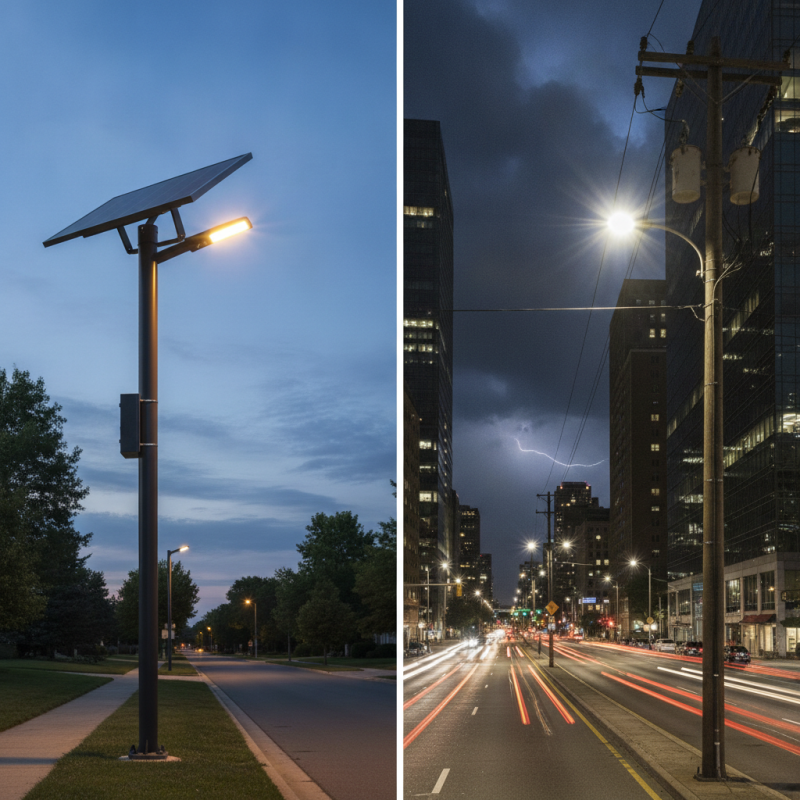
Benefits of Solar-Powered Street Lights in Reducing Energy Costs
Solar-powered street lights have gained popularity for their ability to reduce energy costs significantly. These lights harness sunlight, converting it into electricity for illumination. This eliminates reliance on the grid, which translates to lower monthly expenses. In some areas, energy rates are rising steeply. Choosing solar solutions can offer a stable, predictable cost structure over time.
Maintenance is another critical aspect. Solar lights generally require less upkeep compared to traditional grid-powered options. They often come with long-lasting LED bulbs. Still, occasional monitoring is necessary to ensure optimal performance. Dust or debris on solar panels can affect efficiency. Regular cleaning is essential, but many find this manageable.
Moreover, the environmental impact is compelling. Using renewable energy helps reduce carbon footprints. However, some might question the initial investment cost. The return on investment can vary based on location and usage. A careful evaluation of local conditions is key to making the right choice.
Comparison of Installation Costs for Solar vs. Grid-Powered Street Lights
When considering street light installation, costs vary for solar and grid-powered options. Solar street lights generally have higher upfront costs due to the solar panels and batteries. However, they come with significant long-term savings. No monthly electricity bills mean more budget flexibility. They are often more cost-effective for remote areas where installing grid power would be challenging.
Grid-powered street lights have lower installation costs initially. The connection to existing power lines cuts expenses. Yet, recurring electricity costs can add up over time. Maintenance of grid systems can also be more frequent. Damage from weather or accidents may lead to downtime, incurring extra repair costs.
Both options have strengths and weaknesses. Evaluating your specific needs is essential. Consider installation sites, long-term maintenance, and energy costs. Making the right choice is crucial for sustainable urban planning. Taking time to weigh these factors could lead to better, more informed decisions.
Comparison of Installation Costs for Solar vs. Grid-Powered Street Lights
| Feature |
Solar Street Lights |
Grid-Powered Street Lights |
| Installation Cost (per unit) |
$3,000 - $4,500 |
$1,500 - $2,500 |
| Maintenance Cost (annual) |
$100 - $200 |
$300 - $500 |
| Lifespan |
5 - 7 years |
10 - 15 years |
| Energy Source |
Solar Energy |
Electric Grid |
| Environmental Impact |
Low (renewable energy) |
Moderate to High (fossil fuels) |
| Ideal Locations |
Remote areas, parks |
Urban settings |
Environmental Impact: Solar Energy vs. Traditional Electric Street Lighting
Solar street lights are becoming popular for various reasons. They harness sunlight to illuminate outdoor areas. This not only cuts energy costs but also reduces reliance on traditional electricity sources. Solar lights offer a sustainable alternative. They operate independently, avoiding the complexities of grid connections. However, their initial installation can be higher compared to grid-powered options.
The environmental impact of solar energy is significant. It releases no emissions during operation, contributing to cleaner air. In contrast, traditional electric street lighting often relies on fossil fuels, generating greenhouse gases.
Despite the benefits, solar lights may require consistent maintenance. Factors such as weather and location can affect their efficiency. This can lead to inconsistent lighting in some areas, raising questions about reliability. People must consider these factors when choosing street lighting options.
Effectiveness of Solar Street Lights in Urban vs. Rural Settings
The effectiveness of solar street lights varies significantly between urban and rural settings. In urban areas, the dense infrastructure and high usage of existing power grids can limit the advantages of solar technology. A 2021 report from the International Energy Agency indicated that cities prioritizing energy efficiency may find grid-powered lights more reliable. With densely populated streets, solar panels may struggle to capture enough sunlight due to tall buildings and other structures.
In contrast, rural settings offer an ideal case for solar street lights. According to a study by the U.S. Department of Energy, rural areas often lack electrical infrastructure. Solar street lights can fill this gap efficiently. They reduce installation and maintenance costs dramatically, up to 40% compared to traditional lights. Moreover, solar lights contribute to energy independence and sustainability, which are vital for remote communities.
However, challenges remain in rural deployments. Solar street lights depend heavily on consistent sunlight. Long cloudy periods can limit their functionality. Some studies suggest that hybrid models, combining solar and grid power, could offer solutions. This flexibility might ensure reliability in various weather conditions, providing a more practical approach for rural installations. Understanding the dynamics of each setting is crucial for effective street lighting solutions.
Technological Advancements in Solar Street Lighting Systems and Their Impacts
Solar street lighting systems have seen significant technological advancements in recent years. Innovations in photovoltaic cells allow for more efficient energy conversion. These cells capture sunlight even on cloudy days. Improved battery technology ensures lights remain powered longer, reducing maintenance needs.
Another notable development is the integration of smart technology. Sensors can detect movement and adjust brightness accordingly. This feature enhances energy savings and increases safety in public spaces. However, not all regions have access to these advanced systems yet, creating a disparity in implementation.
Moreover, ongoing research suggests that while solar street lights are effective, they sometimes struggle in extreme weather. Cities must consider local climates when choosing systems. Balancing efficiency with environmental factors is necessary for optimal performance. Understanding these nuances is crucial for making informed decisions on public lighting solutions.
FAQS
: In urban areas, solar street lights can struggle due to tall buildings blocking sunlight.
Yes, rural areas often lack electrical infrastructure, making solar lights a better option.
Solar lights can cut installation and maintenance costs by up to 40% compared to traditional options.
They rely on consistent sunlight, which can be a problem during long cloudy periods.
Yes, combining solar and grid power can help ensure lights work well in various weather conditions.
Innovations in photovoltaic cells and better battery technology enhance efficiency and reduce maintenance needs.
Smart sensors adjust brightness based on movement, leading to energy savings and improved safety.
Yes, extreme weather can impact their performance; local climates should be considered.
Yes, not all regions have the same access to sophisticated solar street lighting technologies.
Each setting has unique challenges; effective solutions must consider these differences.
Conclusion
When considering how to choose between solar and grid-powered street lights, it is essential to evaluate several key factors. Solar-powered street lights offer significant benefits in reducing energy costs and promoting sustainability, making them an attractive option for many municipalities. Furthermore, the installation costs for solar lights can vary, often leading to long-term savings despite potential higher upfront expenses compared to traditional grid-powered systems.
The environmental impact of solar energy is notably positive compared to conventional electric lighting, contributing to reduced carbon footprints. The effectiveness of solar street lights also depends on their deployment in urban versus rural settings, where factors such as sunlight availability and infrastructure influence performance. Additionally, ongoing technological advancements in solar street lighting systems are enhancing their functionality and efficiency. Overall, careful consideration of these aspects can guide decision-makers in selecting the most suitable lighting solution for their specific needs.

 Star Lighting